Housing Affordability
Housing is by far the biggest drain on most Californians’ resources. No matter how many battles we win to raise wages, our spending power gets cut off at the knees by rents that rise to capture every gain. We must fight on both fronts.
- Eliminate Junk Fees
- Build More Housing
- Progressive Vacancy Tax
- Eviction Moratorium
- Regarding Home Values
These policies are why I’m endorsed by progressive affordability and housing-focused organizations like:

The California Democratic Renters Council

East Bay for Everyone

East Bay Stonewall Democratic Club

The Alameda County Democratic Party
More housing = lower rent
Fewer corporate landlords = lower rent
Less real estate flipping = lower rent
Eliminate Junk Fees on Rental Properties
Make it illegal for landlords to charge additional fees to tenants for normal, universal things anyone would expect as part of living there. These include:
- Trash pickup
- Transaction fees
- Administrative Service Fees
- “Convenience” fees
- Package handling fees
- Pet rent
- First parking spot
At first, one may think…
Landlords will just consolidate those fees into the rent, making it higher!
And that’s precisely the point. Landlords will no longer be able to pretend that their property costs less than others on the market by sneaking in extra fees we can’t see in our searches. It allows renters to fairly compare their options, and prevents landlords from deciding mid-lease to add a new fee.
Seattle recently succeeded at banning junk fees, and it’s a vastly popular resolution.
Landlords who violate the junk fee ban could face legal action from the Seattle City Attorney’s Office. The city could recover three times the amount of fees found to have been illegally charged.
Seattle bans rental ‘junk fees,’ including pet rent and package charges
Ban AI Images in Housing Listings
Another way to make the housing market fairer and more transparent is to ban the use of AI generated images in listings. At the very least, the images should indicate the use of AI tools if used.
Build More Housing!
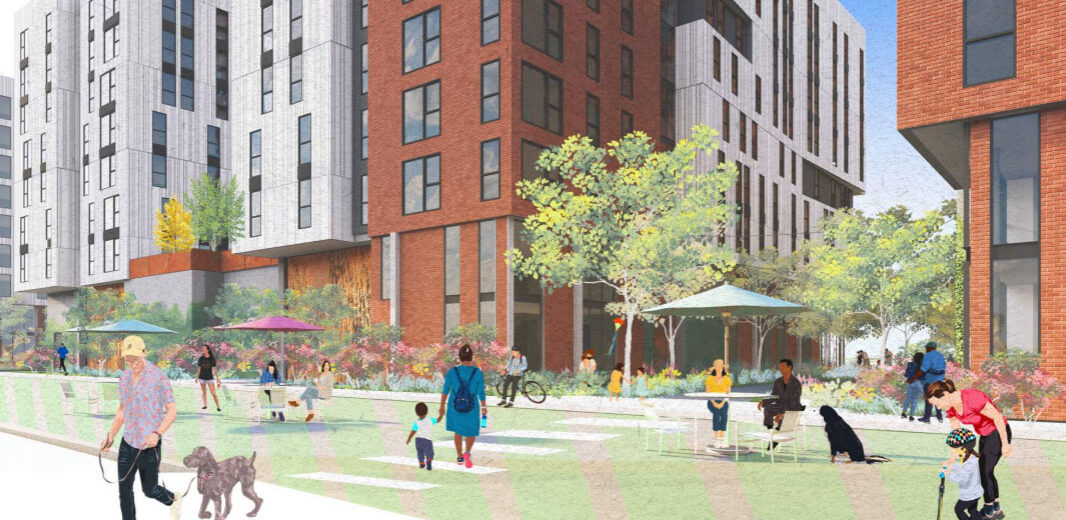
Continue prioritizing our support of building new homes of any kind. We already have several housing projects in the works, and sadly many of them are experiencing delays and snags right now. Not all of these delays are related to things Emeryville city council can affect, but I’ll find the ones we can get unstuck and work to get them back on track.
Yes, even luxury apartments.
Though it may seem counterintuitive, yesterday’s luxury homes become tomorrow’s affordable ones. Every kind of housing we build helps.
While we may not be able to afford to move into the fanciest new constructions, someone will. And then that person’s home will open up to people who can afford it, etc. It may take some time, and the rent prices for the newest buildings may spike our blood pressure, but building more housing is the most reliable long-term way to keep housing more affordable.
- Housing Ladder Spillovers (Michael Wiebe)
Deregulation?
A big push from Ezra Klein’s dubious “abundance” movement is to deregulate housing construction to make it cheaper and faster to build. On closer inspection, there’s classic Republican-style corporate-friendly policy beneath this blue centrist mask.

I am not in favor of any waivers or reductions in environmental reviews for building housing. Environmental health is already well behind our goals as a state and a nation, and those health concerns already disproportionately affect lower income neighborhoods. I will not compromise the health and safety of lower income families.
I am in favor of sensible zoning reforms that update them to modern standards and enable greater density and flexibility in housing construction. Most of these are case-by-case, but one example would be allowing point-access-block construction.
Rent Control
I’d love to implement it in Emeryville similarly to how Berkeley does rent control. I believe a big part of transience and our high rent costs here are because we lack tenant protections like these.
Berkeley’s Rent Control
- Limits rent increases after a tenant moves in, even after the initial lease term ends.
- Allows rent increases if a tenant moves out and a new one moves in.
- Due to state law, it doesn’t apply to new construction, condos, or single-family homes.
All the other ideas I include here will take time to decrease rent prices, but rent control can help today’s tenants stay in their homes for longer while we stabilize the market.
Vacancy Control & Taxes
Wealthy landlords can afford to hold out on getting a renter into their unit for much longer than a renter can afford to wait to find a place to live. This creates yet another unfair tension where “market rate” housing stays higher than it should ever reasonably be.
After a reasonable duration (often 3-6 months) vacancy taxes penalize landlords each month that unit remains unoccupied. It provides financial incentive to lower their asking price or sell the property. Either of which would benefit the market at the cost of hedge funds and other predatory corporate landlords and land hoarders.
Progressive Vacancy Fees
I don’t want just a flat vacancy tax. This would likely put just as much, if not more, pressure on a retiree who has one rental unit they use for passive income as it does on Essex or other corporations. To assert ourselves with the proper distribution of regulation and penalty for the harm these investors do to our housing affordability, we need a parabolic increase in vacancy fees based on how many units the entity in question owns in Emeryville.
| # of Vacant Rental Units | Fee Scale | Sample Cost ($100 for example) |
|---|---|---|
| 1 | 1 | 1 unit x $100 x 1 scale = $100 |
| 2 | 1.5 | 2 x $100 x 1.5 = $300 |
| 3 | 2.25 | 3 x $100 x 2.25 = $675 |
| 4 | 3 | 4 x $100 x 3 = $1,200 |
| 5+ | 5 | 5 x $100 x 5 = $2,500 |
In addition to progressively enacting fees this way, we can also (or instead) base the dollar amount of the fee on the rental’s asking price. This would also encourage them to lower their asking rate.
This can get as complicated as we want it to be. But I’d always want to ensure we’re collecting the most fees from the biggest problematic landlords and doing the least harm possible to your cool auntie’s ADU.
Where Vacancy Fee Funds Would Go
I wouldn’t mind them going into the general fund, but my ideal use for it would be to automatically enroll every Emeryville renter in a publicly funded tenant union. This way we wouldn’t have to rely on city council to always include renters who know what the conditions are like firsthand, and we could enable renters themselves to participate in their own negotiations with their landlords.
We could also put it toward support for city programs aiding unhoused folks or supporting renters.
Blight Taxes
These are occasionally coupled with vacancy taxes, but I do not support blight taxes. They too often force low income homeowners out of their homes and can be too easily gamed by officials who choose which properties are blighted.
Reasonable Exemptions
We would, of course, take into consideration circumstances where we wouldn’t want to penalize the wrong people.
These taxes should include reasonable exemptions for people in medical settings, active-duty military, active listings, and recently completed properties.
Local Vacancy Taxes: A Tool but Not a Panacea
Capping or Freezing Rent
While I know these ideas are popular and Zohran Mamdani used them to great affect in his campaign, I consider them less realistic here in Emeryville. I’d support them if they seemed necessary, without a doubt, but I’d consider it a weak policy position to just parrot popular phrases before discussing more specific and long-term focused measures first.
I would love to cap rent based on local minimum wage. I’m proud we have one of the highest minimum wages in the country, but it means little if our landlords just take that little bit extra we fought for soon after winning such a victory.
Eviction Moratorium
Emeryville needs to declare a housing emergency, which should immediately:
- Pause or Cancel Evictions in the city
- Ban new evictions
- Freeze rent increases for existing leases
- Increase the grace period for late payments
- Focus additional resources on rent relief and services for unhoused people
All of these policies should be enacted until housing emergency status is lifted. These policies should be held as a tool the city can use whenever the occasion arises in the future.
I believe right now qualifies as a housing emergency.
Managing Up
Emeryville can’t control a lot of higher-up regulations we’re limited by for building better housing. We can make declarations and resolutions like other cities have to ask state authorities to:
- Repeal Costa Hawkins (SF’s Resolution to Repeal Costa Hawkins)
Home Values vs. Affordability
It’d be dishonest of me not to talk about this tension. No housing policy will make absolutely everyone happy, but I strongly believe that making Emeryville a more attractive place to live in will be a rising tide that all our home values rise upon long-term. It’s the most sustainable, responsible, and resilient to outside market conditions way to maintain our housing market for everyone.
Invest in Our Community and Our Property Will Benefit With It
When I began my first term on the HOA board for Bridgewater, I occasionally clashed with owners who hated any increase in HOA dues. Even after the big condo insurance price hikes of 2025 (vote for Jane Kim!) when our dues went up more than ever before, residents were at least able to see the smart targeted improvements we made to quality of life here to offset the squeeze we felt on our wallets.
While I have never and will never prioritize landlords over tenants, the owners here who rent out 1-2 units haven’t had any issue finding reasonable tenants since we improved our siding, fencing, security, lighting, and landscaping during my time on the board. Making it attractive to live and stay here will benefit all of us in both near and long term.
Existing Home Owners
I own my condo here in Bridgewater, so I’m financially affected by when condo values go down. But my mortgage, utilities, and HOA dues don’t care how much my apartment is worth. I have to pay them regardless. For the most part, the market value of my home only affects me if I intend to sell. If my home value rises, I can borrow against my equity. If it goes down, my property taxes should be lower that year.
Renters don’t have this benefit of stabilization. They don’t have the security that they’ll pay close to the same per month next year as I will. Even if my HOA dues spike by $25 it’s nothing compared to when rent goes up by $150+. I rented every home I ever lived in until 2021 here, so it’s easy for me to remember how lucky I am. I’d like it if more homeowners rallied alongside renters to find solutions that help all of us together.
Journalists informed by the interests of realtors, corporate real estate investors, and big landlords try to scare us about how our home values aren’t performing the impossible capitalist dream of infinite growth every year. They want us to keep moving, keep flipping our houses, and keep fighting taxes that affect us a little bit and them a lot.
Stable Home Prices Are a Good Thing
First-time home buyers can move here more easily. Growing families can stay instead of needing to change their kids’ schools and lives around to move to a more affordable place. If we want a healthier housing market and a less transient population, this is a big part of how we keep working toward that.
Indisputably, Emeryville’s condos are dropping in price faster than the city’s single-family homes. But both are dropping. It takes until the article’s penultimate paragraph for Leonard to note why that is the case: Emeryville “has long encouraged housing construction, making it a bit easier for buyers to shop for deals.” In other words, Emeryville is a YIMBY success story; by building a lot of housing, including condos, the city has stayed more affordable than neighboring jurisdictions.
Falling Home Prices Are a Measure of Success, Not Failure
Additional Resources
- 5 Things Mayor Daniel Lurie Could Do If He Were Actually Serious About Lowering Rents in San Francisco (Dean Preston)
💖 Join Us! 💖
You can contribute without spending a cent.
💖 Donate 💖
I only accept donations from individuals. No PACs, no corporations, no organizations — even orgs I agree with! This means, I’m relying on you to fund my campaign.

Please fill out my brief form when making a donation of $100 or more so I can follow FPPC rules and don’t have to refund your contribution.