Magic: The Gathering Changed My Life
I’ve been playing Magic: The Gathering on and off for over 20 years now. It has had a significant impact on my life since I was 12 years old, and I wanted to share that. For anyone out there that may think this game (or gaming in general) is a waste of time and money, I want them to know how it helped make me the [happy, fulfilled] man I am today.
Some of the earliest memories might be a bit foggy, but this is how I remember them today.
How It Began
My parents divorced when I was 10. From then on I spent the weekends with my dad, which meant I had to attend his church on Sundays. I hated that church with a fiery passion, and did anything I could to get out of having to sit still through a whole service. For example, though I was never a believer, I joined the acolytes (the kids that light the candles, help in the processions, etc.) just so I didn’t have to sit in the pews reading through the entire Bible for the 4th time.
Well one of the parts of Sunday that I despised the most was what they called coffee hour, a reception after the service was over. I used to look forward to this at my previous church because it meant I could talk and move around again. It meant free cookies and juice, as well as the hope that we’d get to go home and change out of our uncomfortable church clothes soon.
At my dad’s church, it was an opportunity for the mostly adult clergy to hassle me about not participating in church stuff. I refused confirmation, I declined communion (even as an acolyte), I didn’t sing the songs or recite the prayers out loud. I’m sure these people were well-intentioned, but I wasn’t confident enough to stand up on a soapbox by myself and tell them everything they believed in was ridiculous. So instead, I would just sit there and suffer through the lectures.
Youth Group
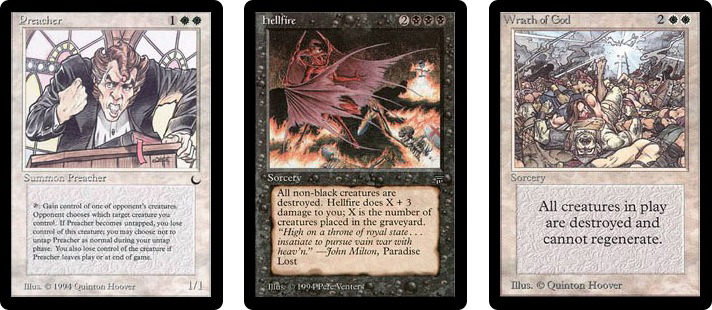
After a year or two, I found out about something called a Youth Group starting up at the church. I flashed back to the crappy Sunday School and confirmation classes I had before and wanted nothing to do with them. And then I met Annie, a girl a couple of years older than me, and she wanted me to join the Youth Group. There weren’t many kids my age at that church, so getting to meet the few we had didn’t sound too bad either.
I left Coffee Hour that Sunday to walk down a hallway I’d never been through and down to the basement. There was a large well-lit room with tiled floors and two ping-pong tables. The air was cool in a way that most people might find chilly, but I love that temperature. The air smelled a little musty, as basements tend to do, but not too badly. I could hear the dull murmur of adults chatting upstairs. A beat-up donated couch sat against one wall facing a TV stand with no TV on top of it yet. It was nearly bare, but it was away from the nagging adults. This is the room where I first learned about Magic: The Gathering.
“Satanic” Gaming
It was funny to me that I didn’t hear anyone talk about the game as Satanic until many years later. I learned it in church after all, and Magic: The Gathering derived many of the spell concepts from The Bible. As a non-believer long before I ever played the game, viewing the holy book along the same lines as Aesop’s Fables made me see the homage in the art of the game as brilliance.
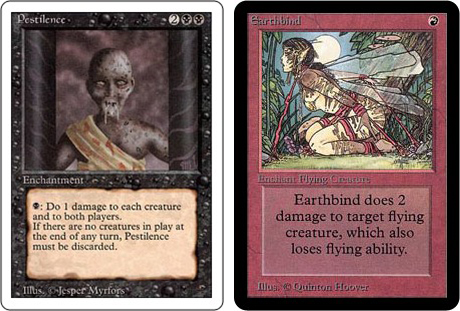
Annie showed me the cards one day in the Youth Group room, and I fell in love with the artwork. I was especially impressed by the artwork for Pestilence and Earthbind.
Pre-Internet Magic
She taught me the basics of the game entirely wrong, but I loved it. Back then, all we had to argue about the rules were the little credit card sized booklets that came with the starter boxes. Now that the internet is around, the rules and errata for the game fill huge downloadable documents.
Soon all my allowance money shifted from comic books and candy to Magic: The Gathering. I found a local shop that sold it, and they gave me some bulk commons to start with (they know how to hook us, heh). Packs were $3.00 at the time, and comic books were usually $1.25 so I had to save up for two weeks for each pack with my $1.25 allowance plus 25 cents per trash bag I took out to the curb.
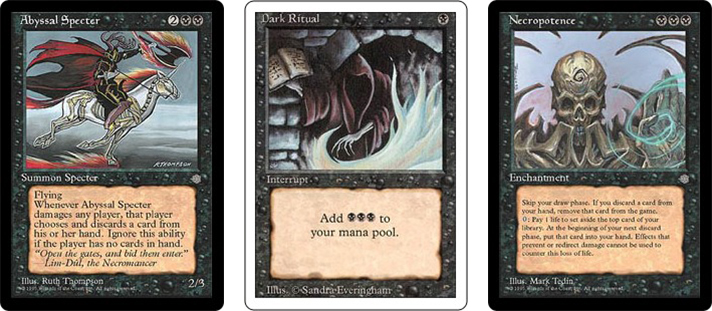
I began teaching some of my friends at middle school how to play (incorrectly, of course). I cringe a bit today thinking about how we would sit on the gum-pocked concrete steps at school and play with Unlimited and Revised Edition cards with no sleeves. Some of those would be worth hundreds of dollars today, but now they’re just fond memories. Bullying kids would make a point to step on our cards and tease us about them, but we didn’t care. Eventually, the lunch supervisors would let us stay inside and use the cafeteria tables to play during recess just like the chess team.
Educational
My English teachers told me I was good at writing stories. I was also in honors classes for math most of the time. No one really seemed to think anything of it when I started using words like “ominous” and “foretold” in my stories. My teachers attributed my ability to do long division, multiplication, and complex multi-step addition and subtraction problems in my head quickly to some natural talent that was blooming forth. Nope. All Magic.
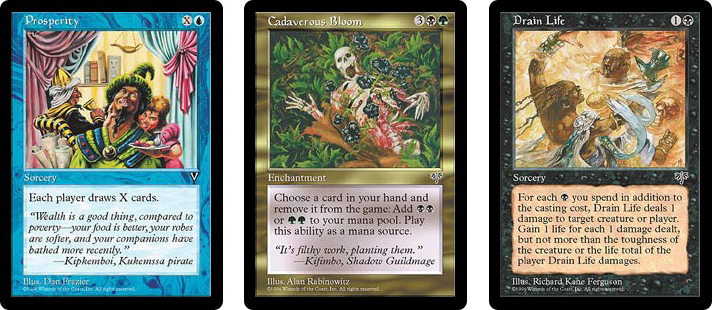
Playing this complicated game with captivating artwork, long instructional text boxes, and flavor text with inspiration from Tolkien and Lovecraft every day made me a faster reader. Trying to figure out how different interactions in the game fell into place made me think more logically and critically. Calculating if I would win various combat configurations in my head before assigning attackers or blockers made me quick at mental math. It shaped many of the skills I use every day today as a professional programmer.
The Next Level
We moved to North Plainfield and I started High School in a completely new school district. All new friends and teachers. I was on the freshmen football team, so my first friends were jocks (because we started practice in August). I still managed to find some interested geeks in that group willing to learn how to play. Those geeks became my best friends in high school.
My allowance reached the point where I could buy a pack per week. Sometimes I had enough left over to see a discounted movie or buy snacks. My friends usually had bigger allowances though, so their collections grew faster than mine.
Local Game Stores
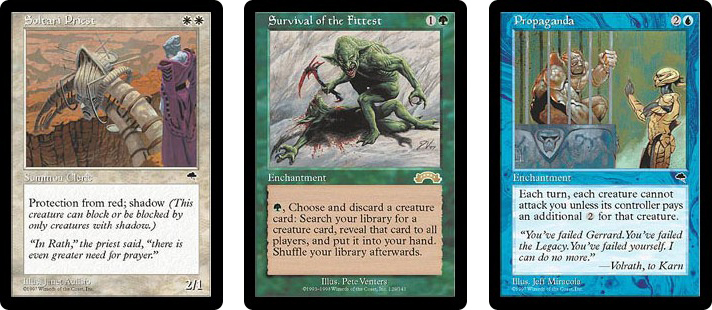
A tiny comic book store in our neighborhood sold packs of the cards, but it wasn’t really their main business. When more of us started going there after school, they started setting up tables for us to play on too. After a few months they started hosting tournaments once a week. My friends met some of the older local Magic: The Gathering players.
They were mostly really nice guys. No one took advantage of us in trades or games. They helped us learn the finer points of the rules. They also almost always won. And we were a competitive bunch of teenagers. We needed to find ways to make more money so we could afford the higher powered cards out there.
So I took an informal part-time job at that store. I helped organize the cards and comics, worked the register, and helped put comics in their bags and boards. Eventually, he would start taking me to conventions and gave me a budget for cards to buy for resale. I’d speculate on cards that local players would be interested in, and learned about profit margins and opportunity cost. I also ran the tournaments for him. All under the table for $4 an hour in store credit.
When new card games came out, he gave me product so I could learn them and do the same. I learned the Marvel Overpower, Star Wars, and Pokemon card games. I got so many kids into Pokemon when their moms and dads would show up to buy comic books.
Leveling Up
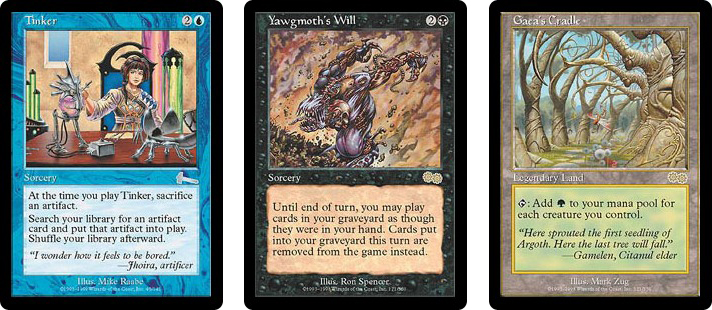
Before long I was starting to beat the 20 and 30-year-old guys at our tournaments. My friends found their own part-time jobs to do the same. We took a lot of pride in it — especially since one of the older guys playing was my friend’s sister’s douchebag boyfriend. Beating him was always especially sweet.
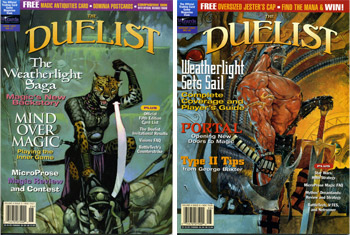
As the competition got stiffer in our local shop, I started reading theory articles about the game. I read The Art of War before my school assigned it. Without thinking about it, I was pulling high level logical concepts from this game every day.
At one point, I was even playing with kids that would later turn into well-known professional Magic: The Gathering pros.
Years Go By
Eventually, I got newer jobs that paid better because I qualified for a worker’s permit. After I got my license, I could make more money but I wanted to spend it going out with girls. I quit Magic when I went to college, then transferred to a school where I’d major in game design.
I didn’t return to Magic until I was living in Las Vegas with Kati, working for a local gaming company. And we were finally financially stable for the first time in our relationship. We were finally getting used to the concept of working full-time without also having to go to classes full-time. I had a lot of time on my hands and disposable income for the first time since I moved out of my parents’ house.
We were playing online video games like Final Fantasy XI, League Of Legends, and World of WarCraft. Eventually we both got tired of never having the apartment to ourselves. I drove Kati nuts being around all the time and I was bored, which made me even more annoying. So… what would get me out of the house, help me make new friends, and engage me as well as video games?
I walked into Action Comics on a random Friday night and was amazed at what I saw. There were 20-something people there playing Magic: The Gathering. Guys of various ages from their mid-teens to early 30’s and even a few girls. There were cardboard stand-ups of super cool Magic: The Gathering style artwork with the banner “Friday Night Magic” on them.
Evolution
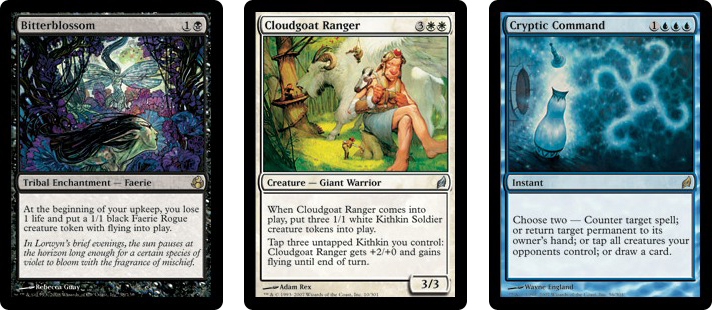
Apparently in the years I was away, Wizards of the Coast made a standardized tournament format all over the country on Friday nights. It wasn’t just a bunch of disparate ragtag groups making their own events up. They were tracking individual players with points, rankings, prize support, door prizes just for showing up, and even special printings of cards with alternate artwork. I was hooked again pretty quickly.
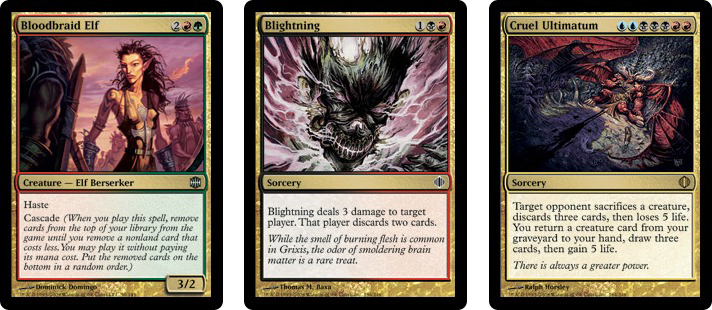
It definitely helped that the community at that store was amazing. I met some lifelong friends there that I still talk to once in a while on social media, even though we’ve all moved to various new cities and states. I even top-8’ed a Pro Tour Qualifier tournament with a Green-White Tokens deck I designed with my buddies. Those are tournaments that usually have about 200+ players in them, and this one had over 300.
Today
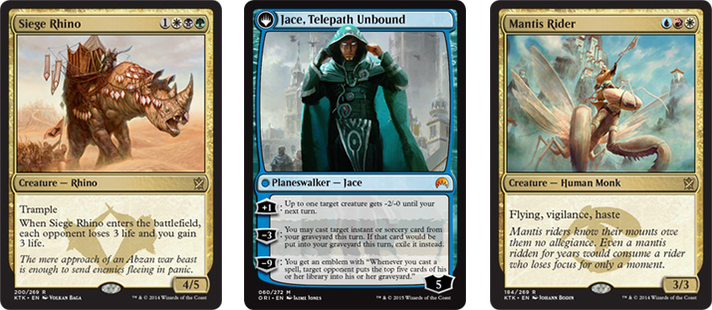
Years have gone by, and with them several blocks and core sets. I’ve quit and rejoined the game a couple more times in between. I’m playing again now and still really enjoying it. I’m still meeting new friends and learning new tactics. The game has gotten bigger and more expensive, but it’s still the complicated, competitive, quirky game I fell in love with. The artwork even got cooler over the years.
When I walk into my local game shops — teenage me would be amazed that there are actually stores dedicated just to card and board games — and see younger kids playing, I’m happy for them. I strive to be that cool older dude that helped me learn the game when I was their age. The game will hopefully inspire them to learn and grow the way it did for me.
I want to take a moment to thank the older, wiser guys that treated me with respect and kindness. I’ve lost touch with most of you, but I know you’re out there somewhere and probably still playing.
Even though I’m sometimes still mad at them for how they handle Mythic Rares… thanks Wizards of the Coast, too.