
5 Characteristics of a Toxic Coworker or Employee
This post contains outdated information. I only remove harmful content and try to keep old posts visible, even if they're embarrassing. Thanks for considering this as you read.
(comment or contact me to request an update about its subject matter)
Every workplace has them at some point. My friends who work in office jobs each complain about that one guy at their office who never does anything but never gets fired. It saps morale, sabotages new hires, wastes company resources, and can even make star employees/coworkers leave. Here’s how to spot one.
1.) Produces Little to No Actual Finished Work

Some people might say that managers generally don’t produce, but most good ones do. They can sometimes work in the same capacity as their subordinates while overseeing them. Some produce training materials, workflow processes, and design/strategy documents. These aren’t the final product, but they’re feasible things that point back to their creator.
A toxic coworker produces little to nothing, and makes efforts to prevent themselves from being measured as an individual. They’re more concerned with their job title and spot on the org chart than in creating or improving things. Any tasks they take on will generally be things that make them look busy, but won’t culminate in anything real.
2.) Cannot Function Independently
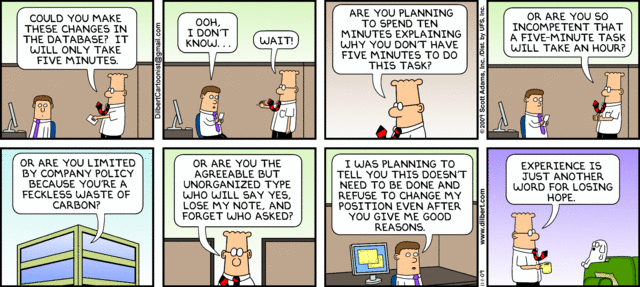
Even the most minor tasks — like Googling a basic question — seem to trouble them. Coworkers may use Let Me Google That For You for their questions. Stuff they could have easily figured out for themselves.
If the toxic coworker manages others, they often have little concept of what their subordinates do. So if that person calls in sick one day, they can’t pick up the slack and do it themselves. Instead, they’ll tell everyone “Sorry, we have to push back the deadline because ____ is sick today”. They’ll make this announcement prominently to pass the buck.
3.) Suggests Projects for Others To Do and Doesn’t Manage Them
When a toxic coworker wants to look good, they’ll try to suggest an idea to the rest of the company. They won’t research the idea thoroughly. They’ll make a point of only having ideas that don’t create any new work for them. On top of that, the people who would have to perform the work are rarely consulted. Neither to vet the request nor to see if they already have a half dozen other projects.
And if — heaven forbid — the project is approved, getting necessary details is often difficult. They answer even the simplest questions at the last possible minute. They’ll be vague and inconsistent in their responses. You’ll have to chase them for responses. They won’t take responsibility for oversight and keeping the project moving.
They often don’t know what they want, but they always want it ASAP. And then, because of their lack of planning or research generally, they change their minds halfway through. Because of this, other workers are expected to compensate. Working late, de-prioritizing other properly-planned projects, and maintained by their stakeholders, and generally burning out.
4.) Unable to Learn New Skills

When a normal worker doesn’t know how to do something, they generally take the first step and look it up. 90% of the time my knowledge deficit ends shortly after a quick Google. Toxic coworkers skip this step, and will instead try to get other people to answer their questions.
Shortly after that knowledgeable person answers them, a toxic coworker will most likely say something similar to “That sounds complicated. Would you mind doing it for me? I’d really appreciate it.” Keep in mind, someone who says this once in a while is not necessarily toxic. People who do this every week or every month for their entire working life are toxic. Especially if they’re asking for the same task repeatedly.
They will often find someone in the office that is “too nice” to say no to them. Using them as a patsy to do their job for them. The toxic worked saddles this nice competent person with the choice of saying no and appearing rude or just doing the task. Patsies will choose the latter. Try not to be a patsy.
5.) Passes Accountability to Others

When something goes wrong, a toxic coworker will be quick to shift the blame on others. They have a sweet deal working in their cushy spot on the org chart, and will defend that position like a rat in a corner. If this means selling out their subordinates or co-workers, so be it.
They also prepare for this eventuality by never giving perfect scores to their co-workers on annual reviews. This normalized [idiotic] corporate practice to always leave room for improvement lets toxic coworkers purposely seek negative comments to make. They want to look better by comparison, and they want the record to appear that way in case someone has to look back for proof. And management is more than happy to hold back raises for everyone using those metrics.
The Cure?
Good company leadership is supposed to spot these people and remove them like a weed from an otherwise flourishing garden. If you catch one early in their employment at your company, you have a chance to rehabilitate them through training, positive reinforcement, and camaraderie. That window is short, and once it starts to be noticed by enough other workers, the cancer has already metastasized.
Once one gets into a management role, it’s hard to locate where exactly the problem is in the chain. The longer it goes on and the larger the company is, the harder they become to detect. This is why it’s important to have an open door policy and conduct periodic 360 degree reviews. That said, if management has been made aware of a toxic coworker — bad peer reviews, unsolicited complaints about them, missed quotas, etc. — and fails to act, it’s a direct reflection on them.
Know how to spot a toxic coworker and do your best to neutralize them before they spread! If you manage them, take action! If it’s a co-worker, tell someone above them in the org chart! Heaven help you if it’s your boss. Start hunting for another job and have some interviews pending for when you go over his/her head to complain. If you end up leaving, insist on an exit interview with someone above your toxic boss where you tell them the truth.
Have You Seen One?
Do you have any stories about toxic coworkers in the past? Leave a comment below to share and we’ll commiserate.